
+9779851111906 (WhatsApp/Viber), info@explorenepaltrek.com
+9779851111906 (WhatsApp/Viber), info@explorenepaltrek.com

- Excellent
USD $26002500 PP
based on 2 PAX
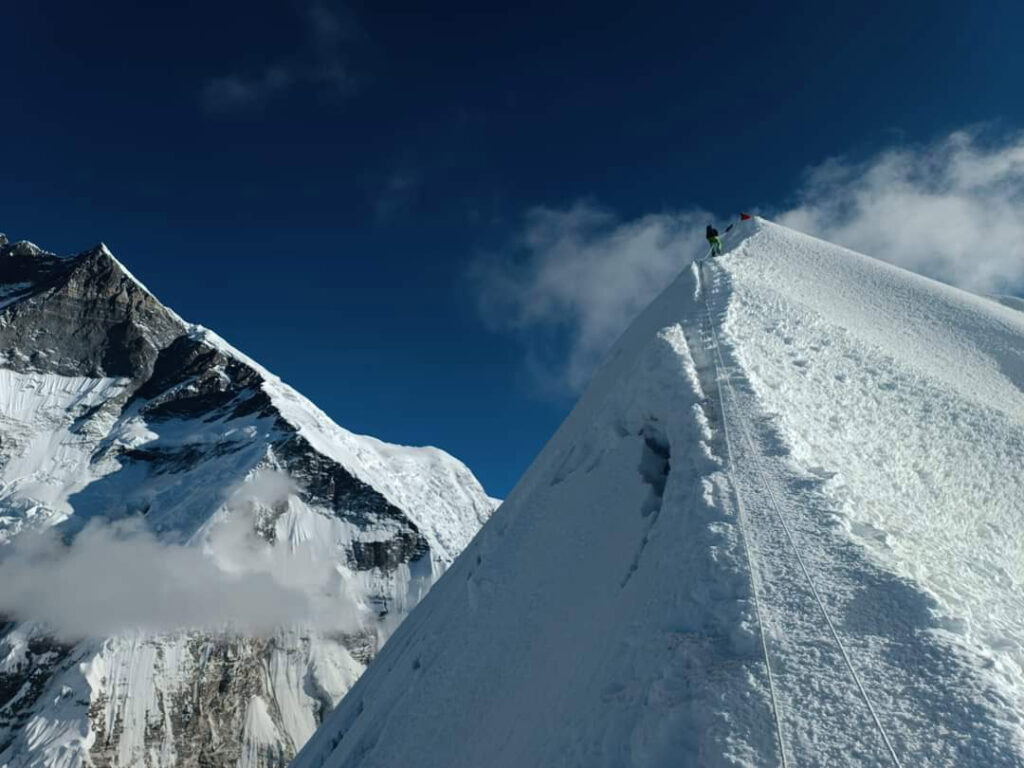
Island Peak in the Khumbu region is one of the most popular climbing peaks at an elevation of 6,165 m. Most climbers choose this peak to practice climbing before expediting mountains above 8,000 meters such as Everest, Annapurna, Makalu, Dhaulagiri, etc. Pass through diverse trails witnessing changing landscapes, forested trails, numerous Sherpa settlements, and snow-covered peaks. Get rewarded with awesome views of Island Peak, Everest, Ama Dablam, Nuptse, Lhotse Shar, Lhotse, Makalu, Baruntse, etc. Witness varied flora and encounter some wild animals while passing Sagarmatha National Park.
Climbers must be both physically and mentally fit and in top-notch status to climb Island Peak. While climbing Island Peak strictly follow the guidelines and learn to use gear and equipment technically. Island Peak Climbing is perfect for climbing in peak seasons Spring and Autumn due to favorable weather conditions and stable temperatures. You can trust our experienced guides and experts with Island Peak Climbing so come and join us in this adventure to cherish for a lifetime.
Day 1: Kathmandu arrival (1400 m)
Day 2: Trek document preparation, (Kathmandu Sightseeing optional)
Day 3: Fly to Lukla (2860 m), trek to Phakding (2610 m)
Day 4: Phakding to Namche Bazaar (3440 m)
Day 5: Acclimatization Day
Day 6: Namche Bazaar to Tengboche (3867 m)
Day 7: Tengboche to Dingboche (4410 m)
Day 8: Acclimatization Day
Day 9: Dingboche to Lobuche (4940 m)
Day 10: Lobuche to Everest Base Camp (5364 m), back to Gorakshep (5164 m)
Day 11: Gorakshep to Kalapatthar (5644.5 m) to Chukhung (4730 m)
Day 12: Chukhung to Island Peak Base Camp (5087 m)
Day 13: Island Peak Base Camp to High Camp (5600 m)
Day 14: Acclimatization Day
Day 15: High Camp to Island Peak Summit (6165 m), return to Base Camp (5087 m)
Day 16: Base Camp to Pangboche (3985 m)
Day 17: Pangboche to Namche Bazaar (3440 m)
Day 18: Namche Bazaar to Lukla (2860 m)
Day 19: Fly to Kathmandu (1400 m)
Day 20: Final Departure
island-peak



Accommodation
Meals
Drinking water
Sagarmatha National Park (SNP), Island Peak Climbing Permit, Khumbu Rural Municipality Permit, Trekkers Information Management System (TIMS), and Garbage Deposit Fee are mandatory permits for the Island Peak Climbing.
Sagarmatha National Park (SNP)
NPR 3000/person (Foreigners)
NPR 1500/person (SAARC)
Island Peak Climbing Permit
USD 250/person [Spring (March-May)]
USD 125/person [Autumn (September- November)]
USD 70/person [Winter (December- February)]
USD 70/person [Summer/Monsoon (June-August)]
Khumbu Rural Municipality Permit
NPR 2000/person (Foreigners)
NPR 1000/person (SAARC)
Trekkers Information Management System (TIMS)
NPR 2000/person (Foreigners)
NPR 1000/person (SAARC)
NPR 500/person (Diplomats/Foreign Officials)
Garbage Deposit Fee: USD 500/person
Island Peak Climbing’s transportation is as follows:
To experience the best views and for climbing, Spring (Mar-May) and Autumn (Sep-Nov) are the best seasons for Island Peak Climbing as the weather is favorable and temperatures are stable in these months. The unstable weather and temperature, slippery trails, flight cancelations, and only limited services are experienced during the summer/monsoon and winter seasons. Plan wisely to climb Island Peak in winter and summer/monsoon seasons.
The Island Peak Climbing has a maximum elevation gain of 6,165m. It is common to get altitude sickness above 2500 m and hence there is a chance of getting altitude sickness during the Island Peak Climbing. Acclimatization rest is the best way to prevent altitude sickness. We advise taking an acclimatization rest as scheduled in the itinerary during the peak climbing.
Altitude Sickness Symptoms
Headache, vomiting, vertigo, restlessness, loss of appetite & sleep, and unconsciousness and hallucination (extreme cases)
Altitude Sickness Preventions
Island Peak Climbing is graded as challenging. This peak climbing demands climbers to trek above an elevation of 5,000 m and stay at high altitudes for longer days. It is beneficial to have a previous trekking experience. This peak climbing is physically demanding and requires climbers to walk long hours daily on rough trails and at high elevations. Climbers can also find difficulty in the limited availability of services and comfort during peak climbing. It is challenging for climbers and we suggest climbers attempt with full planning and preparations only.
Fitness level is an important factor in peak climbing and demands climbers to be in top-notch health conditions. Climbers must be both physically and mentally fit for the Island Peak Climbing. We advise climbers to participate in physical exercises (cardiovascular, high-intensity, etc.), and mental exercises (meditation, yoga, etc.) before starting the peak climbing.
Travel Insurance is very important for peak climbing as it secures travelers from extra expenses that occur due to unforeseen events. We highly recommend having travel insurance from a trusted company. Things to consider while getting travel insurance are as follows:
The Island Peak Climbing requires a standard packing list that climbers can bring personally or hire in Kathmandu. Make sure to pack according to the traveling seasons for a comfortable peak climbing experience. (Note: We provide a comprehensive packing list for ease.)
Attires: T-shirts, Fabric base layers, Fabric short and long sleeve clothes, Waterproof and windproof jacket, Fleece, Hiking shorts, Trekking pants, Trousers, Insulating down jacket, Gloves, Hats, Caps, Beanie, Fabric/quick-drying undergarments, Warm socks, Scarf/Bandana, Gaiters, Balaclava, Raincoat
Footwear: Strong hiking boots, Rubber sandals, casual shoes
Essential Documents: Passport, Travel Insurance, Permits, Passport size photos, Visa Photocopy
Food: Dry Fruits, Light snacks, Energy bars, and energy drink mix
Personal Hygiene: Sunscreen, Lip Balm, Body/Face wipes, Tissue, Quick-drying towel, Body Lotion, Sachet Shampoo, Biodegradable Soap, Toothbrush, Toothpaste, Razor, Nail clipper
Personal Items: Cash, Credit cards, Camera, Phone, Watch, Power bank, and Prescribed Medicines
Accessories: UV sunglasses, Pocket Knife, Solar Chargers, Extra Batteries, Head Lamps, Sewing kit, Torch, Umbrella, Reusable bags, Reusable thermal water bottle
Essential Kits: Backpack, Warm Sleeping bags (-15 degrees), Water purifying solution, Map, Trekking poles, Duffel bag
Gear: Ropes, Crampons, Ice Ax, Ice-claw, Harness, Microspikes (optional)
Welcome to Nepal and our representative greets you at the International Airport. After fulfilling all the formalities, get transferred by a private vehicle to the hotel in Kathmandu. Afterward, a brief meet and discussion with a trek guide, and team. Stay overnight.
The day is trek documentation preparation day. Visit our office for a brief meet and discussion with a trek guide, and team. We shall take care of all your documentation process. There is an optional Kathmandu sightseeing tour which includes places like Kathmandu Durbar Square, Swayambhunath Stupa, Boudhanath Stupa, and Pashupatinath Temple. If you wish to we can arrange it for you. (Extra Cost applies).
Wake up early to board a Lukla flight which takes about 45 minutes. Relish the scenic flight and land at the world’s one extreme airport, Tenzing-Hillary Airport. From Lukla, start trekking to Phakding along with a guide and porters. Cross a suspension bridge and walk past the beautiful settlements of Chhuplung, and Ghat to reach Phakding. Stay overnight in a teahouse.
Note: (The flight schedule is from Ramechhap to Lukla in the peak months of April, May, October, and November.)
Pass through the attractive villages of Monjo and Jorsale and enter Sagarmatha National Park. Show entry permits and continue to trek following a steep trail and admiring various vegetation in the surroundings. If lucky witness some wild animals during the trek. Traverse a popular Hillary suspension bridge and one final ascend on a steep trail to arrive at Namche Bazaar. Stay overnight in a teahouse.
Acclimatization is very necessary to prevent altitude sickness. Hence to get the body adjusted to the surrounding environment take an acclimatization rest as scheduled in the itinerary. Spend the day with a short hike to the popular Everest View Hotel. In the morning start a hike which takes about 1-2 hours depending on the trekker’s speed. Everest View Hotel is at an elevation of 3,880 m which is termed as one of the highest situated hotels in the world. Get a first glimpse of Mt. Everest if the weather is clear including other surrounding peaks. After spending some time, return to Namche. The day is free to explore on your own. Treat yourself to German bakeries, little cafes and restaurants, and drinks at Irish Pubs, and enjoy special coffees in the vicinity. Stay overnight in a teahouse.
Trek slowly as the elevation rises through the ascending and descending trail cherishing the surroundings. Pass through the settlements of Kyangjuma, andPhunkiTenga and arrive at Tengboche. It is home to the largest Tengboche Monastery in the entire Khumbu region.If time permits visit the monastery. Stay overnight in a teahouse.
Ascend slowly as we are trekking above an elevation of 4,000 m. Trek past the forested trail relishing the stunning views of Lhotse Peak, Island Peak, etc. Pass through the settlements of Pangboche, Deboche, and Somare to reach Dingboche. Get a glimpse of terraced fields with crops planted like potatoes, barley, etc. Stay overnight in a teahouse.
The second acclimatization day is spent by taking a short hike to Nangsar Tshang Peak at an elevation of 5,083 m. From the top witness the fabulous views of Cho Oyu, Pumori, and surrounding peaks. Trek down slowly and back to the teahouse for an overnight stay.
Trek past following a steep trail and relishing the surrounding views. Traverse Thokla and other beautiful settlements before reaching Lobuche. On the trail, enjoy the awesome mountain views of Nuptse, Lobuche Peak, Pumori, etc. Stay overnight in a teahouse.
Adoring the beautiful scenery trek to Gorakshep through the glacial moraines of the Khumbu Glacier. The trail is rugged but the surrounding views are captivating. Arrive at Gorakshep for lunch after traversing a Lobuche Pass. Continue to trek to the iconic Everest Base Camp on rugged trails. Admire the views of Khumbu Icefall, Lhotse-Nuptse wall, etc. Get a glimpse of a rocky boulder with Everest Base Camp painted on it. Feel relieved and cherish the moment of finally arriving at the Everest Base Camp. Take pictures, spend some time over here, and create memories. Descend to Gorakshep retracing the same trail for an overnight stay.
Trek to the highest point of the trek i.e. Kalapatthar at an elevation of 5644.5 m. Wake up early and start trekking to get a fascinating sunrise view over the majestic Himalayan ranges. The trek to Kalapatthar is tough yet worthwhile. Get close-up views of the world’s highest Mt. Everest (8848.86 m), Ama Dablam, Pumori, etc. After spending some time, trek back to Chukhung via Dingboche for an overnight stay.
Pass through an ascending trail adoring the beautiful scenery and snow-covered peaks in the surroundings. Enter the wide valley and follow the trail that leads to the Island Peak Base Camp. Our crew members set up the tents for an overnight stay.
Follow the slippery ascending trail carefully and slowly as it is challenging. Walk past sand and boulders through a narrow passage witnessing Lhotse Shar Glacier. After some hours, reach High Camp and here again crew set up the tented camps for overnight stay.
Acclimatization day is very much essential to adjust your body to the surroundings and to prevent altitude sickness. During this peak climbing, acclimatization rest day is very crucial as we participate in pre-climbing training sessions and equipment and gear uses. After completing the training session, trek to nearby places to get comfortable with the environment. For peak climbing, finalize all gear and equipment and do proper checking and packing. Stay overnight in a tented camp.
Today is the main day to summit the Island Peak which is at an elevation of 6,165 m. With full preparation and carrying all equipment, ascend slowly following the footsteps of our expert guides. The temperature and weather are challenging as you climb further so, maintaining the pace climb slowly. Walk along a rocky steep trail and use ropes and gear to climb uphill. Finally, arrive at the top of the summitand get rewarded with the phenomenal views of Ama Dablam, Nuptse, Lhotse Shar, Lhotse, Makalu, Baruntse, etc. Return to Base Camp descending slowly and have lunch and hot drinks. Stay overnight in a tented camp.
Return to Pangboche adoring the picturesque beauty passing through settlements on ascending and descending trails. Cross a suspension bridge to arrive at Pangboche. Stay overnight in a teahouse.
Walk on the descending trail following the Imja River ridge and pass through forested trails to Tengboche. Climb downhill along the Dudh Koshi River passing through ascending and descending trails traversing beautiful settlements. Arrive at Namche Bazaar for an overnight stay.
The trekking day is long but relishing the beautiful surrounding views trek on the descending and ascending trails toward Lukla. Pass the villages like Jorsale, Ghat, and Phakding to reach Lukla for an overnight stay.
After completing a memorable Island Peak Climbing fly back to Kathmandu which takes about 45 minutes. Get transferred to the hotel and the day is free to explore on your own. Join us for a farewell dinner in the evening. Stay overnight.
Note: (The flight schedule is from Lukla to Ramechhap to Kathmandu in the peak months of April, May, October, and November.)
We provide an airport transfer for final departure in a private vehicle as your scheduled flight. Happy Travels.
You can easily get an on-arrival Visa from the International Airport in Nepal upon your arrival.
The trek duration of the Island Peak Climbing is just 16 days.
Spring and Autumn are the best seasons for the Island Peak Climbing.
The necessary permits for the Island Peak Climbing are the Sagarmatha National Park (SNP), Island Peak Climbing Permit, Khumbu Rural Municipality Permit, Garbage Deposit Fee, and the Trekkers Information Management System (TIMS) card.
The maximum elevation gain during the Island Peak Climbing is 6,165 m at the summit of Island Peak.
The basic but comfortable teahouses or guesthouses and tented camps (3 or 4 nights) are the accommodations during the Island Peak Climbing.
Yes, drinking water is easily available and for safe drinking, we recommend using water purifying kits, buying bottled water, or drinking boiled water from teahouses.
In terms of difficulty, the Island Peak Climbingis challenging for climbers.
Yes, the communication facility is fairly stable during the Island Peak Climbing and requires paying extra for charging devices and using Wi-Fi.
The toilet facilities are basic but clean with mostly squat toilets and temporary toilets while tented camps during the Island Peak Climbing.
Yes, we have emergency helicopter rescue services during the Island Peak Climbing and we strongly suggest having travel insurance that covers emergency evacuation.
The domestic flight schedules are normally from Kathmandu to Lukla to Kathmandu and during peak seasons (April, May, October, & November) the flights are scheduled from (Ramechhap to Lukla and Lukla to Ramechhap to Kathmandu).
Only pack essential clothes (lightweight, breathable, & seasonal),comfortable strong shoes, personal belongings, medicines, and useful equipmentfor the Island Peak Climbing.
It is easy to book the Island Peak Climbing with Explore Nepal Trek by simply visiting our website and filling out the booking form. Feel free to directly contact us via email or phone where we will provide you with the necessary detailed trekking information.
"*" indicates required fields