
+9779851111906 (WhatsApp/Viber), info@explorenepaltrek.com
+9779851111906 (WhatsApp/Viber), info@explorenepaltrek.com

- Excellent
USD $30002800 PP
based on 2 PAX
The Upper Mustang Overland Tour is an 8-day road journey from Kathmandu to the walled town of Lo Manthang, reaching around 3,840 meters. Instead of spending two weeks or more on the trail, you explore the remote Upper Mustang landscape by 4WD, with time to experience its old villages, monasteries, and Tibetan-influenced culture.
The route takes you through Pokhara, Kagbeni, Ghami, and Lo Manthang, before returning through Muktinath and Jomsom. The Upper Mustang sits in the rain shadow of the Himalayas, giving the region its dry, rocky landscape and making it possible to travel even during Nepal’s unusual monsoon period.
This trip suits travelers who want to explore Upper Mustang without taking on a long walking itinerary. On the way, you can expect rough sections, dusty roads, and long hours in the jeep. The reward is getting deeper into a part of Nepal where the landscape, villages, and Buddhist heritage feel different from the green valleys around Pokhara.
Over the eight days, you have time to explore Lo Manthang itself before heading back towards Muktinath and Pokhara. The detailed itinerary below breaks down each drive, stop, and overnight stay so you can know exactly what the journey involves.
Choosing an Upper Mustang Overland Tour comes down to how you want to experience the region. A road journey lets you cover a large portion of Mustang in just eight days. It covers visiting places such as Kagbeni, Ghami, and Lo Manthang without needing to spending most of your time walking on the dry trails.
The biggest advantage is time. With a 4WD jeep, you can reach remote villages and high-altitude areas that would require several days of trekking. You still get to stop for photographs, visit monasteries, and walk through the village areas. For travelers with limited vacation time, the Upper Mustang Overland Tour can be a possible choice.
While trekking gives you more time to notice every small detail on the trail, like quiet sections between villages and the gradual change in the scenery. Road travel lets you cover more places in less time, but you spend most of the time sitting in the vehicle.
So, this Upper Mustang road trip is ot about choosing the “better” option. It is about choosing the one that fits your time, comfort, and travel style. If reaching Lo Manthang matters more to you than spending two weeks on foot, the overland route makes a lot of sense.
The road to Lo Manthang is not just about reaching the final destination. The landscape changes gradually as you move north, and that change is one of the most interesting parts of the Upper Mustang Overland Tour.
You begin around Pokhara, where the hills are green, and the valleys feel busy. By the time you reach Jomsom and Kagbeni, the scenery becomes drier, wider, and noticeably more rugged. From Kagbeni, the journey changes again. The road now follows the upper Kali Gandaki region through dry cliffs, rocky slopes, and small settlements.
On the way, you cross through Ghami, which is almost entirely barren landscapes with mud-brick homes, prayer flags, and old Buddhist structures. As the jeep climbs higher, the road becomes rougher in places. Eventually, the landscape opens towards the high plateau around Lo Manthang. The former walled kingdom sits at about 3,840 m, surrounded by dry mountains and broad valleys.
Yes, the Upper Mustang Overland Tour for 8 days is a good fit if you want to see Lo Manthang without spending two weeks trekking. You don’t need to be a strong trekker, but it helps to be comfortable with long hours in a 4WD jeep, changing road conditions, and spending time at higher elevations above 3,000 m.
The physical demand is different from trekking. You are not walking for sizx of seven hours each day with a backpack, but the driving can still feel tough. Some sections of the Upper Mustang jeep tour are rough, dusty, and winding through bumpy road conditions.
Altitude is another thing to take seriously. The route climbs from Pokhara to Kagbeni, Ghami, and finally to Lo Manthang at 3,840 m (12,598 ft) within a few days. Even though you are traveling by vehicle, your body still has to adjust to the higher surroundings.
This Upper Mustang Overland Tour works great for couples, families, older travelers who are comfortable with mountain roads, and anyone with limited holiday time. It may be less suitable for long drivers, rough roads, or basic accommodation. In that case, a longer trekking itinerary or a slower overland trip may be more comfortable.
The cost of our 8-day Upper Mustang Overland Tour depends on your group size. The package covers the private vehicle, guide, permits, accommodation, and meals. For larger groups, the cost per person is usually lower.
|
Group Size |
Cost per person |
|
1 person |
USD -3000 |
|
2 – 4 people |
USD -2500 |
|
5 – 8 people |
USD -2300 |
|
9 – 12 |
USD -2000 |
A 4WD is one of the main cost parts because you are covering the vehicle, driver, fuel, and the long mountain route from Pokhara to Upper Mustang and back. A smaller group may therefore pay more than a larger private vehicle group sharing the same vehicle. Permits are another fixed part of the budget. The Upper Mustang is a restricted area, so travelers need the required special permit and other applicable permits to enter.
Then there are the everyday costs such as accommodation in places like Kagbeni, Ghami, and Lo Manthang, meals during the journey, and the sofa-seated tourist bus used on the Kathmandu-Pokhara sections.
Before you think of booking this Upper Mustang overland tour, closely look at the cost inclusion section rather than just choosing the one that looks cheaper. A lower rate can look affordable at the start, but usually does not cover permits, meals, transportation, and accommodation.
Day 01: Drive from Kathmandu (1,400 m / 4,593 ft) to Pokhara (822 m / 2,696 ft) by Sofa-Seated Tourist Bus, 7–8 hours.
Day 02: Drive from Pokhara (822 m / 2,696 ft) to Kagbeni (2,850 m / 9,350 ft) by 4WD Jeep, 7–8 hours.
Day 03: Drive from Kagbeni (2,850 m / 9,350 ft) to Ghami (3,510 m / 11,515 ft) by 4WD Jeep, 5–6 hours.
Day 04: Drive from Ghami (3,510 m / 11,515 ft) to Lo Manthang (3,840 m / 12,598 ft) by 4WD Jeep, 4–5 hours.
Day 05: Explore Lo Manthang (3,840 m / 12,598 ft) and its surrounding areas by 4WD Jeep, 5–7 hours.
Day 06: Drive from Lo Manthang (3,840 m / 12,598 ft) to Muktinath (3,710 m / 12,172 ft) and then to Jomsom (2,743 m / 8,999 ft) by 4WD Jeep, 6–7 hours.
Day 07: Drive from Jomsom (2,743 m / 8,999 ft) to Pokhara (822 m / 2,696 ft) by 4WD Jeep, 7–8 hours.
Day 08: Drive from Pokhara (822 m / 2,696 ft) to Kathmandu (1,400 m / 4,593 ft) by Sofa-Seated Tourist Bus, 7–8 hours.
This day is all about beginning your Upper Mustang overland tour. So, your day 01 starts with a comfortable drive from Kathmandu and heads towards Pokhara, also known as the city of lakes. This day’s journey covers around 200 km, passing through the Prithvi Highway. As per the road conditions, the drive can last from 7 to 8 hours. The moment you leave from Kathmandu, the busy streets slowly change to green hills, terraced fields, rivers, and small remote towns. As you reach Pokhara, take your time to rest, recover from the drive, and if you want, walk around the streets and spend the evening alongside Phewa Lake.
Today, the overland journey really begins. You leave Pokhara and head north towards Kagbeni, with around 7 to 8 hours of driving. The road gradually leaves the greener hills behind as you travel through the Kali Gandaki and move to a drier landscape of Mustang.
The route passes through Beni, Tatopani, Ghasa, Marpha, and Jomsom, with short stops along the way. Along the way, the scenery keeps on changing as you gain altitude. The lush hills change to a rockier state, the valley narrows in places, and the wind around Jomsom gives an exposed area.
After Jomsom, the drive heads north towards Kagbeni, an old village sitting at the main point. The final section can be dusty and bumpy, so it’s better if you don’t expect a smooth ride, especially this time. In the afternoon, you reach Kagbeni, offering a chance to walk around its narrow lanes and rest before heading deeper into Mustang.
You finally enter Upper Mustang. After having your breakfast in Kagbeni, you leave for Ghami, passing through dry and rugged hills with scenery getting more noticeable as you move further. Even at times, the road crosses through traditional settlements and exposed mountain terrain where wind and dust can be a major part of today’s drive.
The drives travel through areas such as Tangbe and Chele, giving insights into the narrow village lanes and cultivated paths. As you approach Ghami, the valley opens up, and the village appears among the dry hills. If there is enough time, you can visit the long Ghami Mani walls, which are made up of rows of prayer stones, and explore the village at your own pace.
The road to Lo Manthang gets you deeper into Upper Mustang today. As you leave from Ghamu, you drive towards the walled settlement of Lo, which takes around 4 to 5 hours; however, the actual time can depend on the road conditions and stops. The drive passes through Tsarang, which is one of the traditional villages that includes a popular old monastery.
From here, the road climbs towards the Lo La Pass, at around 3,950 m, where the views open across the high Mustang plateau. On a clear day, this is one of those places where you understand just how different Upper Mustang is. After reaching Lo Manthang, check into your teahouse, take some time to walk through the old lanes and get your first feel of the Kingdom of Mustang.
Today is less about driving and more about seeing around Lo Manthang. At 3,840 m, this walled settlement sits on a high, dry plateau surrounded by bare mountain ridges. With around 5 to 7 hours for exploration, you can move between the old town and nearby cultural sites without spending the whole day on the road.
The day starts with a nourishing breakfast and then a walk through the narrow lanes inside the walled city, where traditional mud-brick houses, prayer wheels and old courtyards still shape everyday life. You can also visit the area’s historic monasteries, depending on local access and your guide arrangement.
Keep the pace comfortable today. You are still above 3,800 m, and even a short walk can feel demanding. By afternoon, you return to Lo Manthang for a quiet evening and your final night in Upper Mustang.
It’s time to leave Lo Manthang and begin the journey back towards lower Mustang. The drive starts at 3,840 m and continues towards Muktinath before descending further to Jomsom. The return gives you a different view of the landscape you passed earlier. At Muktinath, take time to visit the famous pilgrimage area, where Hindus and Buddhist traditions meet around the sacred temples and natural springs.
From Muktinath, the road continues down toward Jomsom through the Kali Gandaki Valley. You notice the altitude dropping as the air gradually becomes warmer.
The final mountain drive begins from Jomsom as you now head south towards Pokhara. The drive is about 7 to 8 hours, which gives a last encounter with dry, high-altitude scenery changing into greener areas as you move through the lower areas.
The route takes you through Marpha, Tukuche, Kalopani and Tatopani, with the landscape changing at almost every stage. Some sections of the road can still be rough, where the route follows the river valley. Once you reach Pokhara, check into your hotel and enjoy a more relaxed evening. After days in the mountains, the lakeside atmosphere will feel different.
This marks the end of your Upper Mustang Overland Tour. On this day, you simply take a return drive from Pokhara to Kathmandu, which takes 7 to 8 hours as before. The road passes through the same area where you first made your way to Pokhara.
As the bus leaves Pokhara, you travel along the Prithvi Highway, passing through roadside towns, terraced hills and sections of the Trishuli River valley. By the time you reach Kathmandu, the stop is directly at your hotel accommodation
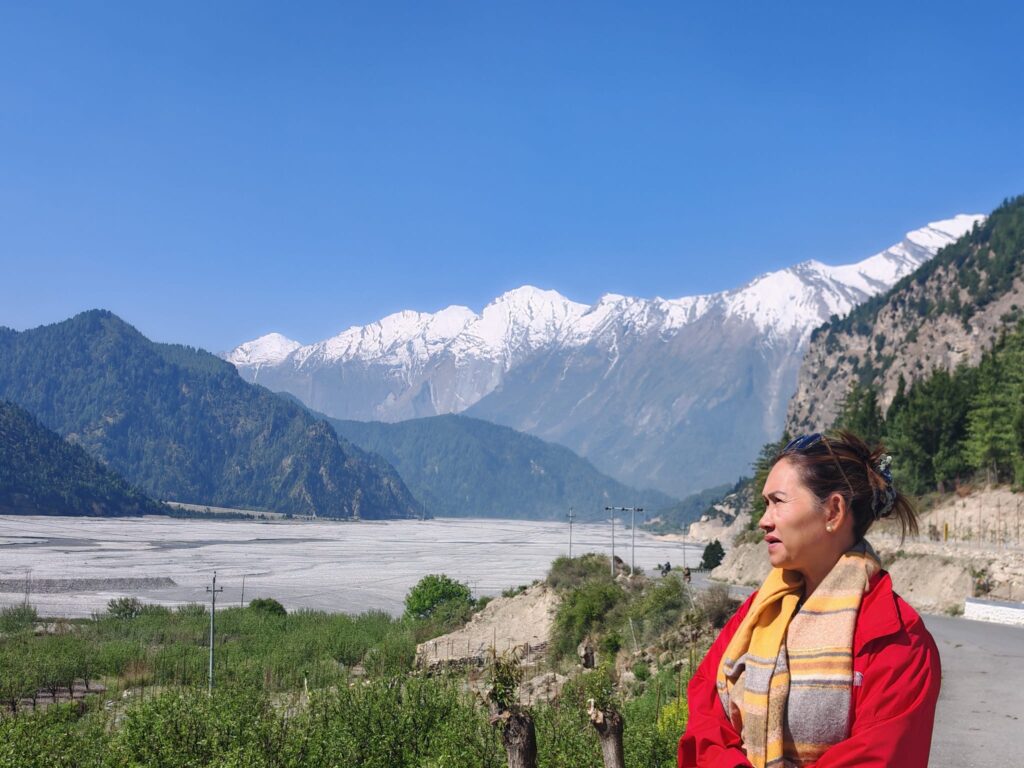
upper mustang view
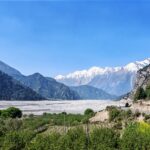
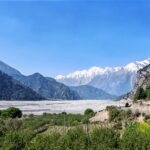
The best time for the Upper Mustang Overland Tour depends heavily on what matters most to you. Stable road conditions, fewer travelers, or the chance to travel during the monsoon. As the Upper Mustang region lies in the rain shadow of the Annapurna and Dhaulagiri ranges, it stays drier than many other parts of Nepal.
Spring, from March to May, is a comfortable time for the journey. The days are generally pleasant for driving and sightseeing, while the landscapes start to warm up after winter. June to August is monsoon season, so travel is possible even during this season, as it sits behind the Himalayas, which keeps the region relatively dry.
Autumn, particularly from September to November, is another recommended time for the Upper Mustang via Jeep tour. The weather is generally stable, as it starts right after the monsoon, offering great visibility and crystal-clear mountain vistas.
Winter is also possible but can feel colder at higher altitude. Along the routes, there is a possibility of snow or difficult conditions as well. Rather than just asking about the best season to do this trip, choose the one that can match your preferences and expectations.
Accommodation and food become simpler as you travel deeper into the Upper Mustang, but that is part of what makes the Upper Mustang Overland Tour feel different. In Kathmandu and Pokhara, you stay in comfortable hotels. Similarly, for your stay at Kagbeni, Ghami, and Lo Manthang, the overnight stays remain at a local teahouse or small lodge. The rooms are quite simple and cozy to get some comfort after a long day of driving. Hot showers, electricity, and internet may be available for an extra cost.
Food along the route is simple, with limited but filling choices of dishes. You commonly find dal bhat, noodles, momo, Tibetan-style noodles, soups, potatoes, rice dishes, and simple breakfast items. In Lo Manthang and larger villages, you have more choice, while smaller stops may offer short menu items.
Note: If you have any meal restrictions, tell your guide before the journey rather than waiting until you arrive at the final stop.
Packing for your 8-day Upper Mustang road trip is a little different from preparing for a long trek. Keep your main luggage lightweight and carry a small day bag with the things you want during the drive.
As we know, Upper Mustang is a restricted area, so international travelers cannot drive into the region independently. They are required to have valid trekking permits that must be secured through a registered trekking agency.
For the Upper Mustang Overland Tour, the permit arrangement is handled by your trekking agency rather than organizing it yourself. Upper Mustang Restricted Area Permit and Annapurna Conservation Area Permit (ACAP) are needed for doing the Upper Mustang via road trip.
As per Nepal’s Department of Immigration, the fee is around USD 50 per person per day. In the same way, the Nepal Tourism Board Office marked the ACAP permit costs around NPR 3,000 (approx. US$30).
The Upper Mustang region feels remote for a reason. Once you travel beyond Kagbeni, services become less predictable, the roads can be rough, and you move through the everyday life of the locals. Here are some simple preparations that can make the Upper Mustang travel much more comfortable.
Travel insurance is an important part of preparing for an Upper Mustang Overland Tour, even though most of the journey is on a 4WD. The route reaches 3,840 m at Lo Manthang and passes through remote mountain areas where access to medical facilities can be limited. It is equally advisable to choose a policy that specifically covers high-altitude travel, emergency medical treatment, emergency evacuation, and trip cancellations or interruption.
Travel insurance is strongly recommended. So, choosing a policy that covers high-altitude travel, emergency evacuation, and medical treatment is necessary. Keep in mind and check the insurer’s altitude limits and exclusions before purchasing the policy.