September 25, 2026
Annapurna Circuit Trek Difficulty: Is It Really Hard?
The Annapurna Circuit Trek isn’t an easy walk, but you don’t need to be an athlete to complete it. Some of the crucial challenges come from spending several days on the mountain trail that reaches above 5,000 meters. So, if you go further, the days start to feel tough, and some days leave you with your legs getting tired by the evening.
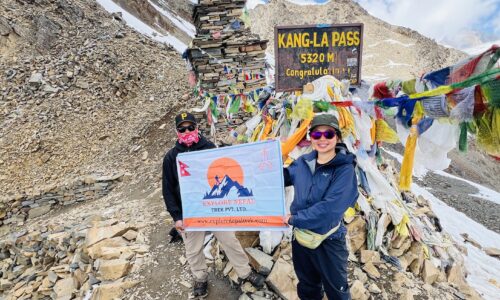
The changing walking trail and environment each day is also part of the journey that makes it feel even more arduous. If you are wondering about the Annapurna Circuit trek difficulty, think of it as a moderate to challenging trek rather than a technical climb. The route passes through well-marked mountain trails, which do not even require any ropes or climbing essentials. However, reaching around 5,416 meters at the Thorong La Pass is what makes it tough.
Therefore, for the Annapurna Circuit trek difficulty, being prepared for the high-altitude mountain crossing is what’s more important. Regular walking, a constant pace, and enough time to adjust to the altitude makes even a beginner trekker to complete the trip.
Annapurna Circuit Trek Difficulty at a Glance
The Annapurna Circuit is usually a moderate to challenging trek rather than an extreme one. Most trekking days involve several hours of walking, while the Thorong La crossing is the clear highest point to reach. The table below gives you the main difficulty factor without going into the full itinerary.
| Difficulty Factor | What to Expect |
| Overall difficulty | Moderate to challenging |
| Walking hours | 5 to 7 hours per day |
| Hardest walking day | Thorong La Pass crossing |
| Thorong La altitude | 5,416 m (17,769 ft) |
| Highest Point | Thorong La Pass (5,416 m) |
| Terrain condition | Rocky trails, stone steps, climbs and long descents |
| Main physical demand | Endurance over consecutive trekking days |
| Fitness required | Reasonable cardiovascular endurance and leg strength |
| Overall challenge | High altitude, long walking days, and varied terrain sections |
What Makes the Annapurna Circuit Trek Difficult?
For the Annapurna Circuit trek, the major challenge is the changing conditions as you move through the route. You start at a much lower elevation, where walking may feel manageable, then gradually enter colder and thinner mountain air. In such situations, your body needs to keep working while the environment completely changes, and a pace that feels normal at the beginning may feel too heavy.
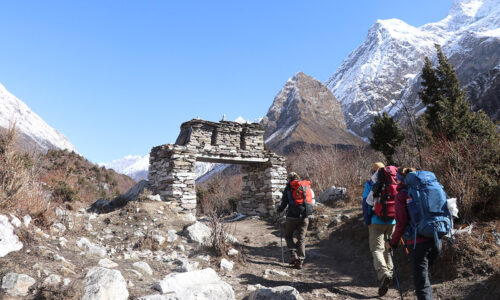
Even the trail is what adds to the Annapurna Circuit trek difficulty. Along the way, you walk through stone steps, rocky paths, uneven sections, suspension bridges, and long uphill or downhill stretches. None of these requires technical climbing skills, but they can become tiring when repeated for several hours.
Then there is the altitude. Reaching above 5,000 meters puts a very different demand on your body than an ordinary hill climb. This is the actual reason why the Circuit trek feels much harder than the distance alone. However, with good pacing and a proper acclimatization plan, the entire journey can be easily done.
How Much Walking Do You Need to Handle Each Day?
One thing people often underestimate is how much walking adds up over the whole trek. You are not simply walking for a long day and then going home. Most days involve several hours on the trail, followed by another trekking day the next morning. Even when the pace is relaxed, your legs still have to recover while you continue moving.
The walking time can change quite a bit depending on the section of the route. A shorter day may feel easy, while a longer day with plenty of climbing can take much more out of you. The same distance can also feel completely different when you are walking uphill compared with a flatter section.
That is why your preparation should focus on walking endurance, not just speed. Being able to walk comfortably for a few hours is useful, but being able to do it again the following day is what really matters on the circuit.
Thorong La Pass: The Hardest Part You Need to Train For
Absolutely. The Thorong La Pass at 5,416 meters is the most demanding section as well as the highest point of the Annapurna Circuit Trek. So, standing here means walking uphill while the air feels thinner than at lower elevations. The early start, cold morning, and steady climb can make the effort feel heavier than expected.
The climb itself is not a technical mountaineering route. You do not need ropes or climbing skills. What you need is extra patience. The trail can feel slow near the top, so trying to rush usually makes the day harder. Short steps and regular breaks are much more useful than ascending faster.
After reaching the pass, the work is not finished. There is a long descent towards Muktinath, which can be tough on tired knees and thighs. For many trekkers, Thorong La Pass difficulty comes from the combination of altitude, the climb, and the descent rather than one phase of the route.
How Fit Do You Need to Be for the Annapurna Circuit?
You do not need to have extreme fitness to take on the Annapurna Circuit. A better benchmark is everyday endurance. If you can comfortably walk for a few hours, handle hills or stairs, and stay active without feeling completely drained, you already have a useful point to begin this trek.
Leg strength matters too, especially because the route is not flat. Your legs will work through repeated climbs and descents, and a backpack adds a little extra load. For that, simple training that includes uphill walking, stair climbing, long weekend walks, and basic squats can help you get ready well without any hassle.
For the Annapurna Circuit trek, fitness level and consistency matter more than trying to become extremely strong in a short time. Start several weeks ahead and gradually make your walks longer. You want your body to become comfortable with spending a long day on the trail, rather than doing something similar again the next day.
Can a Beginner Complete the Annapurna Circuit trek?
Yes, beginners can complete the Annapurna Circuit trek, but being new to trekking does not mean going in completely unprepared. You do not need previous high-altitude trekking expertise, yet it helps if you have already spent time walking on hills or doing longer hikes. The first few days are also a good chance to settle into the routine before the more demanding sections.
What matters most is knowing your own pace. A beginner who walks steadily and takes sensible breaks can often manage better than someone who is very fit but tries to move too quickly. There is no prize for reaching the next village first. Your body needs time to adjust as the trail gets higher.
If this is your first multi-day trek, give yourself enough preparation time and choose an itinerary that allows proper acclimatization. The Annapurna Circuit Trek for beginners is possible, but it should be taken as a serious mountain trek rather than a simple hiking trip.
What Should You Train for Before the Annapurna Circuit?
Your training does not need to be complicated. Start with the activity you will actually do on the trail. Include regular walks and slowly increase the distance, especially if you usually spend most of your day sitting. Once that feels comfortable, add hills or stairs. They are useful because they make your legs work harder without needing special equipment.
It is also worth training for downhill walking. People often prepare for climbing but forget that descending for a long time can be just as tiring. Simple exercises such as squats, lunges, step-ups, and calf raises can help build the strength you need for uneven mountain trails.
For Annapurna Circuit trek training, consistency is more useful than one exhausting workout each week. Give yourself several weeks to build up gradually.
Does Being Fit Protect You from Altitude Sickness?
Being physically fit can make the walking easier, but it does not guarantee that you will avoid altitude sickness. A trekker who regular exercise can still feel unwell while they are at higher elevation. It is mainly due to altitude affecting your body due to less supply of oxygen.
This is why the Annapurna Circuit trek difficulty cannot be judged by fitness alone. As you gain elevation, you may notice a headache, unusual tiredness, dizziness, or a reduced appetite. These symptoms should not be treated as something you simply have to push through.
The great approach is to walk at a comfortable pace, allow enough time for acclimatization, stay hydrated, and pay attention to how you feel.
What Makes the Trek Harder Than You Expect?
The part that catches some trekkers off guard is not always the steepest climb. It is the accumulation of effort. You wake up, pack your things, walk for hours, eat, rest, and then do much of the same thing the following morning. After several days, even a normal trail can feel harder because your body will not have much time to recover fully.
Your sleeping cycle can also affect how you feel throughout the trek. Reaching higher altitudes, colder nights, basic facilities, and less sleep can make the next day sluggish. That is the exact reason why the Annapurna Circuit Trek difficulty is not just about the steep climbs or higher altitude.
Carrying a daypack, passing through changing weather conditions, and that too through uneven sections is what adds difficulty to your trek.
How Do You Know If You Are Actually Ready for this trek?
A simple way to judge your readiness is to look at what your body can already handle. If you can go on a long hilly walk without needing frequent stops, recover reasonably well afterward, and repeat a similar effort a few days later, that is a good sign. You do not need to match the trek perfectly during training.
Try testing yourself with a longer weekend walk before the trip. Carry the daypack you expect to use and include some uphill and downhill sections. Pay attention to how your legs feel towards the end, not just during the first hour. If you are struggling early, be sure to inform your guide and team member.
If your current fitness is below that level, do not panic. Build it gradually, give yourself enough preparation time, and focus on becoming comfortable with long days trek.
Annapurna Circuit Trek Difficulty: Honest Answer
The Annapurna Circuit trek difficulty is manageable for someone with a decent level of fitness. The route requires paying attention for several days, dealing with changing conditions, and keeping moving as the elevation increases. That can be tiring even when you are generally fit.
You do not need to be a professional hiker or spend months training in a gym. What helps more is being comfortable with long walks, hills, stairs, and repeated days on your feet. If you already enjoy regular walking, you have a solid base to work from. If not, start building your endurance before the trip.
The biggest mistake is judging the trek only by how strong you feel at sea level. Altitude recovery, weather, and pacing can change the experience. Prepare steadily, give your body time to adjust, and respect the harder sections of the route.
Frequently Asked Questions (FAQ’s)
1. How hard is the Annapurna Circuit Trek?
Considered a moderate to challenging trek, the major Annapurna Circuit Trek difficulty comes from the long days on the trail and gradual changes in the surrounding, higher elevations, and crossing the high-altitude Thorong La Pass.
2. Is the Annapurna Circuit harder than Everest Base Camp?
Both of them are equally challenging in their own ways. While the Annapurna Circuit trek involves more varied terrain and a high pass, the Everest Base Camp trek is especially demanding because of high-altitude walking each day.
3. Can a beginner do the Annapurna Circuit?
Yes. But having some previous experience can be extremely helpful, mainly for the Thorong La section. With having some basic fitness, there are trekkers who have completed this trek without any difficulties.
4. What is the hardest part of trekking the Annapurna Circuit?
We have noticed many trekkers face difficulty during the Thorong La crossing, which is at 5,416 meters. However, it is normal for every human to feel some challenges at such altitude. It includes a combination of high open sections and colder temperatures, and the long descent that makes each day feel tiring.
5. Do I need to be very fit for the Annapurna Circuit trek?
While an extreme level of fitness is not required for this trek. you should be able to handle long walks through uphill sections, and that too for several consecutive days. Doing so can give you a much better experience of trekking as well as comfort.
6. What training should I focus on more to overcome the Annapurna Circuit Trek difficulty?
To have a relaxing start and end of your Annapurna Circuit trek, trekkers are suggested to focus more on regular walking, hill climbing, stairs, and main priority to leg-strength exercises. Prior training and increasing your walking time each day is what can help you overcome the challenges.