September 14, 2026
What is The Annapurna Base Camp Trek Like in Winter?
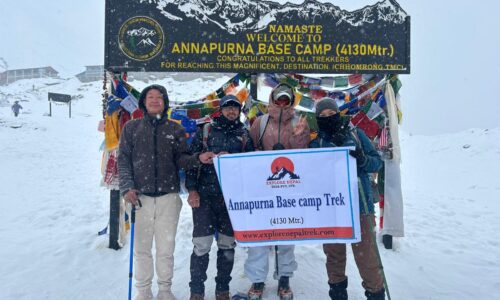
The Annapurna Base Camp Trek in winter is cold, quieter than the peak seasons, and noticeably more demanding once you climb above Deurali. Although the lower sections around Ghandruk and Chhomrong can still feel comfortable when the sun is out, higher up, snow and ice can change the trail completely. ABC sits at 4,130 m, so this isn’t a normal trek you can do with just a warmer jacket.
The biggest change is underfoot. Around the upper section toward Machhapuchare Base Campand ABC, snow can cover the trail and ice can form in shaded areas. January and February require more caution after fresh snowfall because some sections can become difficult to cross, and the shorter winter daylight gives you less room to recover from a slow walking day.
But there is a good side to Winter Trekking in The Annapurna Region. The season can give you clear mountain views and much quieter trails, while the teahouses are mostly empty. As you go higher towards the peaceful Annapurna Sanctuary, the cold mornings and snowy paths can create a challenge for your trek.
The winter trek to ABC is preferable only if you are equipped with comfortable cold-weather gear and have enough flexibility to change the plan if snow conditions turn bad.
Is The Annapurna Base Camp Trek Open During Winter Season?
Yes, the Annapurna Base Camp Trek in winter is possible. Ranging from December to February, this is one of the best seasons to experience Annapurna in its purest form. Even though there is less chance of route closure, that does not mean every part of the trail will be easy to pass.
The Nepal Tourism Board Office confirms that the ABC can be travelled year-round, while warning that January and February are cold and some higher trekking trails can be covered by snow. Snow and conditions around the higher sections are the real issue in winter. As you climb towards ABC at about 4,130 m, temperatures drop sharply, and snowfall can make the trail difficult.
This is where trekking becomes more of a conditions-based decision. An early December weekcan be a perfectly manageable time, while snowfall in January can change the situation quickly. So, if you are planning Annapurna Base Camp in winter, check the recent trail and snow conditions before leaving Pokhara. Eventually, it is a wise decision to stay flexible with your itinerary as well.
Can Beginners Trek Annapurna Base Camp in winter?
Yes. Beginners can Trek to Annapurna Base Camp in winter. The only thing they need to consider is having reasonable fitness and being fully prepared for colder conditions in the coming days. For this, you do not need technical climbing expertise, but you should be comfortable walking several hours each day.
The main difference in winter is the trail condition. Snow and ice can appear around Deurali, Machhapuchare Base Camp, and ABC, making some sections slower and more slippery. For now, January is the toughest month, while early December and late February can be a little easier.
For a first winter trek, carry proper thermal layers, a warm sleeping bag, waterproof boots, and traction such as microspikes if snow is expected. Most importantly, keep your itinerary flexible. Being a complete beginner is not the problem. Going unprepared is.
Weather and Temperature Month by Month: December vs. January vs. February.
Winter conditions at Annapurna Base Camp vary slightly by month, but all three are cold while you reach 4,130 m. Early December is usually a little more manageable, while January is at its coldest time, and February has moderate temperatures because of end winter month.
| Month | Daytime at ABC | Nighttime at ABC | Typical conditions |
| December | -5°C to 5°C | -10°C to -18°C | Cold, chances of snow and ice at higher sections |
| January | -5°C to 2°C | -15°C to -20°C | Coldest and most prone to snow |
| February | -3°C to 5°C | -10°C to -17°C | Still cold, gradually improving |
December is a good choice if you want winter without the harsh conditions. January is the toughest month, especially after snowfall around Deurali, MBC, and the Annapurna Base Camp area. Likewise, February remains cold, but late February can offer slightly easier daytime conditions.
We highly recommend Choosing early December or late February for a better balance of trekking. However, don’t judge the trek only by looking at the temperature. Factors such as fresh snow can also make the trail slower to move and more slippery even when the conditions do not look extreme.
How Difficult is Annapurna Base Camp Trek in Winter?
The Annapurna Base Camp trek can be easily done throughout the year, but winter can add a few extra challenges. Spring and autumn make the trail usually easier to follow, with less chance of snow on the upper section. Winter can bring snow and ice around Deurali, MBC, and ABC, making the same trail slower and more slippery.
| Season | Difficulty | Main challenge |
| Winter | Moderate to hard | Cold, snow, and icy sections, especially at the higher areas of the route |
| Spring | Moderate | Longer walking days, frequent rainfall, trails packed with trekkers, and limited accommodation options |
| Autumn | Moderate | Busy trails, less accommodation available, and steady uphill walking. |
For most trekkers, spring and autumn are easier overall, mainly because conditions are more predictable. Still, a Winter Trek to Annapurna Base Camp is not difficult because of the longer distance or steepness. The cold, shorter daylight, and changing trail conditions are what make it demanding.
If you are comfortable walking on snow and carrying proper gear, winter can still be a good choice. Just allow some extra time on snowy sections, travel with an experienced guide, and avoid rushing when the trail is icy.
Are Teahouses and Trails Actually Open in Winter?
Yes, the Annapurna Base Camp in winter can be trekked, and teahouses are fully operational. The lower stops around Ghandruk, Chhomrong, Sinuwa, and Bamboo are generally easier for accommodation. The real question comes when you reach higher up, especially around Deurali, MBC, and ABC, where some lodges may lack rescue services or close during the cold period.
The trail itself does not simply close because it is winter. Snow and ice are the bigger issue. After fresh snowfall, sections above Deurali can become slow and slippery, and conditions can change within a day. That’s why checking the latest accommodation situation before leaving Chhomrong or Deurali is more useful.
For a winter trek to ABC, keep your plan flexible. Carry proper cold-weather gear, allow extra walking time, and confirm where you will sleep before getting to higher elevations.
What Gear Do You Actually Need for the Annapurna Base Camp Trek in Winter?
You do not need a huge amount of technical climbing equipment for the Annapurna Base Camp trek in winter. All you need to be prepared for is cold nights and possible snow, usually at higher altitudes above Deurali.
● Insulated down jacket for evenings and higher elevations.
● Thermal base layers for both upper and lower body
● Fleece or warm mid-layer for daytime and evenings
● Waterproof trekking jacket and trousers in case of snow or wet weather
● Warm trekking trousers rather than lightweight summer pants
● Wool or thermal socks, with at least one spare pair.
● Sturdy and well-broken-in trekking boots with good grip (waterproof highly recommended)
● Microspikes or traction spikes if snow and ice are expected
● Warm gloves and a fleece/wool hat
● Sleeping bag rated around -15°C to -20°C
● Headlamp with spare batteries
● Sunglasses and sunscreen because of strong sunlight
Note: do not pack only for the temperature you expect in Pokhara or lower villages. The conditions change quickly after Deurali. Check the forecast and current snow conditions before heading higher, then adjust your gear accordingly.
Reasons Why Some Trekkers Prefer Winter Trek.
Everyone assumes winter makes the Annapurna Base Camp Trek a worse experience. Not necessarily. The cold is real, but winter can give you something that the popular seasons cannot. It lets you enjoy the quieter trail from the start to the end of your adventure. December, January, and February generally attract fewer trekkers, so places like Chhomrong, MBC, and ABC can feel much less crowded than during spring or autumn.
Another advantage is the visibility. Winter is known to bring dry air and crystal-clear mountain panoramas, especially on mornings when the sky is impressive. You may get breathtaking views of Annapurna South, Hiunchuli, Machhapuchhre, and the surrounding peaks. Snow on the upper trail can also completely change the character of the route.
If you are prepared to face minus-degree temperatures and fewer travelers on the way, then winter can be a rewarding season to complete your Annapurna Base Camp Trek.
Is December to February Actually Worth It? Our Honest Take.
Yes, the Annapurna Base Camp Trek in winter is worth it, but it is not the season we would recommend to everyone. If your priority is warmer weather and the easiest trail conditions, spring or autumn makes more sense. Winter becomes attractive when you care more about quiet trails, clearer mornings, and fewer people at the teahouses.
December is probably the easiest winter choice. Doing the Annapurna Trek in January brings temperatures in the minus degrees and requires extra preparation. Similarly, February starts to feel slightly more manageable toward the end of the month. Snow and ice can slow you down, and some teahouses may have reduced services.
So, would we choose winter? Yes, with the right preparation and a flexible itinerary. If you have proper winter clothing, good boots, and enough time to adjust to trail conditions, the quieter ABC experience can easily make the extra cold worthwhile.
Frequently Asked Questions for Annapurna Base Camp Trek in Winter.
1. Can first-time trekkers complete the Annapurna Base Camp Trek in Winter?
Absolutely. Even a beginner can trek to Annapurna during winter if they gain a resonable fitness and are properly prepared for cold, snow, and icy sections. While winter is more demanding than spring or autumn, a slower pace and a well-planned Annapurna Itinerary can be extremely helpful.
2. Is there snow at Annapurna Base Camp Trek in December?
There can be snow at the base camp in December; you can even see it around Deurali and Machhapuchare Base Camp. The amount of snow depends heavily on the season you plan to trek. However, fresh snowfall makes the upper trail slippery and increases walking time.
3. What’s The coldest month to Trek Annapurna Base Camp?
For the Annapurna Base Camp Trek in winter, January is known to be the coldest month to attempt. At this time, night temperatures around higher sections start getting very cold, and snow and ice are more likely to stay on the trail.
4. Do I need crampons or microspikes for the winter ABC Trek?
Not always. Microspikes are useful when snow or ice covers the trail, especially above Deurali. Full crampons are normally unnecessary for the standard ABC trekking route, but conditions can change after heavy snowfall.
5. Is winter cheaper for the Annapurna Base Camp Trek?
Annapurna Base Camp during winter can be slightly cheaper in some cases because it is an off-season period and only experienced ones think of doing it. However, the main trekking costs such as permits, transportation, guides, and accommodation do not automatically become cheaper. The only advantage at this time is fewer crowds rather than a major price reduction.
6. Is Annapurna Base Camp safe in winter?
Yes, Annapurna Base Camp can be a safe option for winter only if done with proper preparation. The main concerns are the snow, icy sections, cold temperatures, and shorter daylight. So, it is better to check the latest trail conditions before heading above Deurali.
7. Which month is best for the Annapurna Camp Trek in winter?
December is usually the best choice for winter ABC if you want cold-weather trekking without the harsh conditions. February can also work well, mostly at the end of the month when temperatures start improving.
8. Are teahouses open at Annapurna Base Camp in winter?
Obviously. Along the route of the Annapurna Base Camp trek in winter, there is availability of teahouses. At lower sections, you get a wide range of accommodation, while at higher elevations, those facilities are limited. Before you move further, make sure to confirm accommodation, especially in Deurali, Machhapuchare Base Camp, and Annapurna Base Camp.
9. How much snow can you expect on the ABC trail in winter?
There is no fixed amount because snowfall changes from year to year. Lower sections may have little or no snow, while the trail around Deurali, MBC, and ABC can become snow-covered after a storm. Fresh snow can also make the trail slower and more slippery.
10. Are mountain peaks visible even During winter?
Yes. If the weather is clear, you can easily get astonishing views of mountains such as Annapurna South, Hiunchuli, Machhapuchare, and other nearby peaks. Winter is especially clear with dry mornings and good mountain visibility, after snowfall or on stable weather days.