
+9779851111906 (WhatsApp/Viber), info@explorenepaltrek.com
+9779851111906 (WhatsApp/Viber), info@explorenepaltrek.com

- Excellent
𝐨𝐯𝐞𝐫𝐯𝐢𝐞𝐰
Trekking Upper Mustang begins in a way that may feel familiar, but the further we travel into the region, the more the landscape begins to change. The green hills start to disappear, and dry valleys, cliffs, and quiet mountain villages start becoming part of the trail. After leading this route, we have found that this change is one of the things trekkers enjoy most. The farther we go, the more Upper Mustang reveals its unique beauty.
The Upper Mustang trip starts the moment you see a transition from green hills to dry valleys, colorful cliffs, and charming villages. Each day on the way brings a noticeable change in the landscape. Strolling through the quiet trails often gives a feeling that time here moves a little more slowly. In this way, it allows you to appreciate the surroundings without distraction.
What stays with many trekkers after the journey is not always the viewpoint or mountain. It is often the quieter moment in between. Sitting down for a cup of tea in a village, talking with local families, hearing prayer flags move in the wind, or simply wandering through the narrow lanes of the old settlement. We have seen this many times during our Upper Mustang journeys.
These simple moments are what make the Upper Mustang trek feel more personal than just another Himalayan trek in Nepal. The moment you reach Lo Manthang, the journey starts to feel different than the previous days. After days of walking through dry valleys and a remote environment, the entire old walled city gives a sense of a completely new part of the remote region trip.
This place serves as a resting place as well as an equally impressive choice to explore around. The narrow lanes, traditional homes, and old monasteries give a satisfying experience that you truly won’t find in other remote treks in Nepal. Spend your valuable time, take photos of the Forbidden Kingdom, and seek permission while you stroll around. This is the place to slow down your pace and fully enjoy the scenery, while having one-to-one interactions with the locals.
Although trekking Upper Mustang is considered a moderate adventure, it requires being more patient than accelerating your speed. The route is designed to let you settle into the scenery of the mountains while enjoying the varied landscape, warm hospitality, and distinctive character of every village along the trail.
These details are here to help you understand what this odyssey is really like before making your plans. From the itinerary and permits to accommodation, best time to visit, and trekking tips, you will find only honest information that helps you decide whether the Upper Mustang Trek Nepalis the right experience for you.
After leading trekkers through the Upper Mustang Region over the years, one thing we have noticed is that travelers rarely describe this journey as saying, the mountains were beautiful. Instead, they share background about the quiet villages they did not even expect, a conversation with the local family over a cup of tea, or the feeling of walking through landscapes that looked different than what they had imagined.
That’s what makes Upper Mustang different. The memories stay with travelers because of how the journey feels, not just what they saw. We even notice the same reaction after crossing Kagbeni. The green hills slowly start to fade, and the trail opens into wider valleys that are filled with colorful cliffs, deep canyons, and dramatic rock formations.
Many trekkers pause more often here, not because they are tired, but because every few minutes the scenery changes again. It is one of those places where putting the camera away for a moment somehow becomes just as satisfying as taking another photo.
The culture is another reason this trek leaves such a lasting impression. Whenever we reach settlements like Charang or Lo Manthang, the pace of the journey seems to slow down. After spending hours on the open trail, walking into these villages and seeing the traditional homes, quiet streets, and people following their daily routines feels peaceful.
Some trekkers even ask us how this trek compares with the Everest Base Camp Trek or the Annapurna Circuit Trek. Our answer is always the same. If your main goal is standing beneath the world’s highest mountain, Everest is the right choice. While the Circuit trek is for those who plan to cross the dramatic mountain passes and enjoy a constant change in the scenery.
When trekkers ask us whether the Upper Mustang Trek is difficult, we usually tell them not to judge it only by the distance. The trail, even though it is not a technical one, can feel different from a normal hike when walking for several hours at higher altitude. Most days involve around 4 to 7 hours of walking, with some sections including steady climbs and descents over dry, uneven mountain trails.
The trail itself changes as you move deeper into Mustang. Around Kagbeni, you still see more familiar valley landscapes, but farther into Upper Mustang, the path becomes more exposed and rugged. Altitude is another major thing travelers need to consider for the entire trek. The route takes you towards Lo Manthang, which sits at around 3,840 meters. So, reaching such altitude requires your body to acclimatize properly.
For beginners, trekking Upper Mustang can be manageable when the itinerary allows enough time for gradual acclimatization. We encourage trekkers to take the slower approach rather than trying to cover too much distance in one day. A rest, or let’s say an exploration day around Lo Manthang, is useful because it gives you time to recover while experiencing the region instead of simply passing through it.
Overall, we would describe the Upper Mustang Trek difficulty as moderate rather than technical. It suits travelers who are prepared to walk consistently at altitude and who understand that comfort in the mountains comes from a well-maintained pace.
When planning your Upper Mustang Trek cost, it is important to look at inclusions rather than just the price shown on the package. The Upper Mustang trek packages cover everything that is needed for trekking here, such as a restricted area permit, transportation to Jomsom, accommodation, meals, guide & porter services, and necessary arrangements based on your preferences.
We even recommend trekkers carry some extra Nepalese cash with them for small purchases along the route. Things like drinks, snacks, hot showers, charging your phones, WiFi, and tipping the guide and porter are not included in the package.
These costs can seem minor, but they are important to be considered while you leave from Pokhara. In smaller villages, card payments are not always available, so having cash with you gives you one less thing to worry about during the trek.
|
Group Size |
Price Per Person |
|
1 person |
USD3000 |
|
2 – 4 pax |
USD2500 |
|
5 – 8 pax |
USD2000 |
|
9 – 12 pax |
USD1800 |
The price may vary depending on the travel season, domestic flight availability, accommodation preferences, and group size. Please confirm the current rate with us before booking.
Over the years of organizing and experiencing the Upper Mustang Trek, we have learned that a few practical details can make a noticeable difference to how you enjoy the journey. These are not always included in a standard itinerary, but they are the small details we usually discuss with trekkers before they leave.
What Our Experience Means for Your Upper Mustang Journey
We have learned that the small decisions made during the trek often matter more than the itinerary. After leading groups through Upper Mustang, these are some of the practical things we pay attention to.
Day 01: Early morning drive from Kathmandu to Pokhara (822 m / 2,697 ft), 7 – 8 hours.
Day 02: Flight from Pokhara to Jomsom and Trek to Kagbeni (2,810 m / 9,219 ft), 20 – 25 minutes.
Day 03: Trek from Kagbeni to Chele (3,050 m / 10,007 ft), 5 – 6 hours.
Day 04: Trek from Chele to Syanboche (3,800 m / 12,467 ft), 6 – 7 hours.
Day 05: Trek from Syanboche to Ghami (3,520 m / 11,549 ft), 5 – 6 hours.
Day 06: Trek from Ghami to Charang (3,560 m / 11,680 ft), 4 – 5 hours.
Day 07: Trek from Charang to Lo Manthang (3,840 m / 12,598 ft), 5 – 6 hours.
Day 08: Acclimatization Day in Lo Manthang and explore the Chhoser Cave complex, traditional villages, and ancient monasteries.
Day 09: Trek from Lo Manthang to Dhakmar (3,820 m / 12,533 ft), 6 – 7 hours.
Day 10: Trek from Dhakmar to Ghiling (3,570 m 11,713 ft), 5 – 6 hours.
Day 11: Trek from Ghiling to Chhusang (2,980 m / 9,777 ft), 6 – 7 hours.
Day 12: Trek from Chhusang to Jomsom (2,720 m / 8,924 ft), 6 – 7 hours.
Day 13: Fly from Jomsom to Pokhara (822 m / 2,697 ft), 20 – 25 minutes.
Day 14: Drive from Pokhara to Kathmandu (1,400 m / 4,593 ft), 7 – 8 hours.
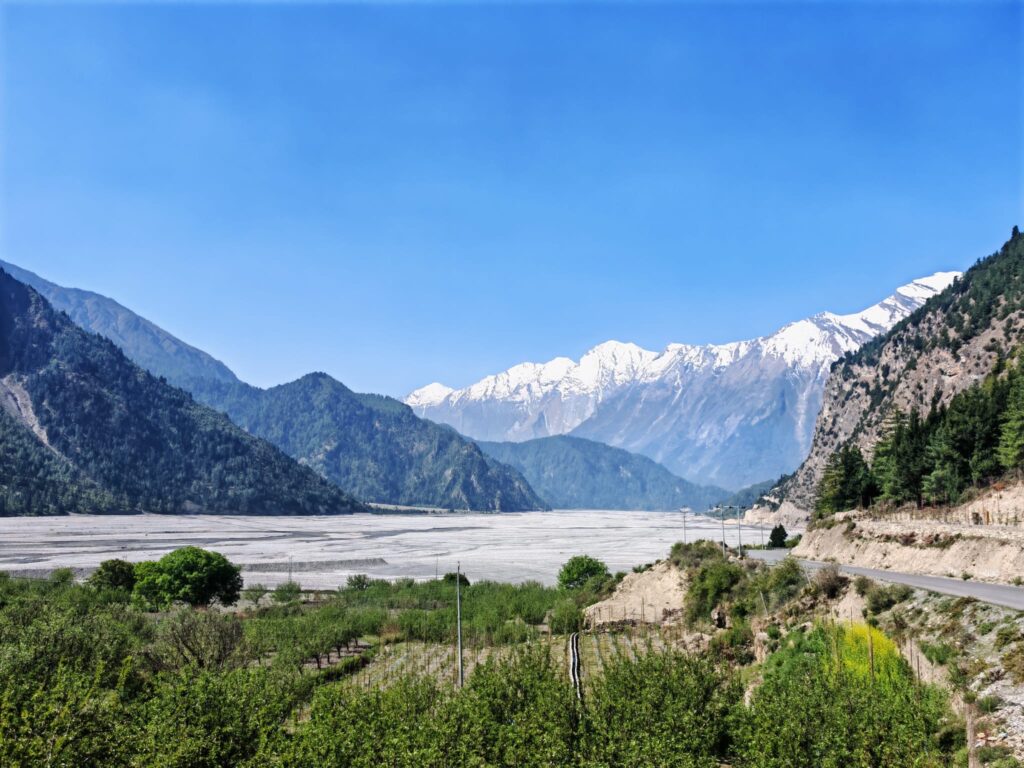
upper mustang
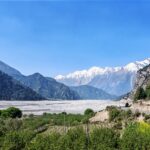
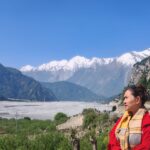
You will be making your first section of the trek, as this is simply a peaceful drive from Kathmandu to the beautiful lakeside city of Pokhara. The duration of the drive is around 7 to 8 hours, which is enough to enjoy the green hills, picturesque rivers on the way, as well as small towns. The drive can be long, but it depends on the traffic and road conditions; however, the road is pretty much well-maintained now.
After having your breakfast, you will be taking a morning flight from Pokhara and head directly to Jomsom. The flight is short, which rewards to the breathtaking panoramas of the Himalayan landscapes the moment you enter the Mustang region. With 20 to 25 minutes of memorable flight, you finally land at Jomsom Airport, and then begin the trek towards Kagbeni.
The Jomsom to Kagbeni route involves passing through the Kali Gandaki Valley, offering a gradual change in the landscape. The deeper you go, the surroundings start to feel more like Mustang, with a drier, more rugged environment around you. Upon reaching Kagbeni, the atmosphere here starts to feel different, giving you a look at the traditional homes and a real glimpse of the culture.
You will be trekking from Kagbeni and moving further towards Chele. Today’s walk feels much more remote than what you encountered before, especially for the lower sections. With a nourishing breakfast from Kagbeni, the trail now proceeds along the Kalu Gandaki Valley. Along the way, you feel that the scenery slowly starts to change, as it completely feels different now. The area is replaced by a dry valley, rocky slopes, and colorful cliffs that are less common to see at the lower section of the route.
The further you continue towards Chele, the route now changes into gradual climbs and more open sections. The pace today is kept comfortable, especially while you gain altitude. On the way, you pass small settlements and see the traditional way of life that makes this region feel different.
After around 5 to 6 hours of walking, you reach Chele. Once you reach there, the day is usually spent resting and looking around the village. This is a good place to slow down after the day’s walk and prepare for higher trails ahead.
Today is one of the most demanding walking days as the trail climbs higher into Upper Mustang. As you leave Chele behind, you follow a mix of rocky trails that climb with open mountain sections. The moment you gain altitude, the landscape becomes drier, with dramatic cliffs and wide valleys.
The walk is best taken at a steady pace. There is no need to rush, especially as your body is acclimatizing. Along the way, you will pass quieter sections of Mustang and get a closer look at the remote areas. After around 6 to 7 hours on the trail, you reach Syanboche at 3,800 meters. Once you arrive, take the evening slowly.
After breakfast in Syanboche, you will continue towards Ghami. The trail starts through open valleys and dry mountain surroundings, with scenery that keeps on changing the further you move. Since today’s walk is a little shorter, you can take your time and enjoy the surroundings without feeling rushed.
As you continue walking, you will see the colors and shapes of the cliffs changing around you. The trail also becomes quieter, with fewer settlements around you. This gives you a better chance to enjoy a wide, open landscape that makes Upper Mustang feel different from other trekking areas.
After around 5 to 6 hours, you will reach Ghami. It is one of the larger villages on this part of the route, with traditional stone and mud-built homes.
Followed by an early morning breakfast in Ghami, you now further move towards Charang, which is a shorter yet equally incredible section of the trail. The trail passes through dry valleys, rocky hills, and open sections where the surrounding cliffs become a noticeable part of the scenery.
As you walk towards Charang, you begin to see more signs of the region’s Tibetan Buddhist culture. Take your time along the trail rather than focusing only on reaching your next stop. The way looks at the changing landscape and quiet surroundings that are a big part of what makes this section feel more enjoyable.
The walk around 4 to 5 hours takes you to Charang, a charming settlement known for its old houses and cultural sites. The moment you reach Charang, take a rest and then continue exploring the villages at your own pace, as this place has several local monasteries.
You will leave from Charang to Lo Manthang, continuing through dry valleys and landscapes that start to open as you elevate. The higher you move, the better the scenery starts to get as you now get closer to the old walled city. With a steady pace, you now reach Lo Manthang after 5 to 6 hours, but keep in mind that the duration depends on how you walk. Once you reach, take time to rest and enjoy this ancient walled city of Mustang.
Today is a full day of rest and exploration in Lo Manthang. It is important to take a short exploration around this place rather than spending time just at the teahouses. On this day, you first visit the Chhoser Cave complex, which is another major highlight of Lo Manthang. These caves provide useful insights into the history of the locals in the remote region. You can also visit local monasteries and walk through the surrounding settlements. Since there is no longer trek today, take your time and enjoy the place you visit.
You will leave Lo Manthang after having your breakfast and begin the trek towards Dhakmar. Today’s route takes you back into the open Mustang landscapes. You need to cross through dry hills and quieter sections of the trail. The walk takes around 6 to 7 hours, so a steady pace can be an important thing to consider.
The red cliffs around Dhakmar are hard to miss while you leave in the morning. The trail then winds through dry hills and open valleys towards Ghiling. Although you lose some altitude today, there are still a few short climbs, so it is not a complete downhill walk. The path might feel dusty and exposed in some places; still, it is better if you take a walk around the villages instead of just resting in the teahouses.
You begin descending from Ghiling down to Chhusang, which requires careful footing and walking at a steady pace. The time you get down, the route feels much rockier and narrower, so it’s better if you follow what your guide says. You notice that the landscape starts becoming greener as you get to the lower section. Reaching Chhusang is the meeting point of several streams and the Kali Gandaki, which gives a different feeling from the higher Mustang settlement.
From Chhusang, the trail drops into the Kali Gandaki riverbed and stays close to it for much of the day. The walk passes through flatter sections at the start, but the high wind can make the walk feel tiring. As you approach Jomsom, the scenery starts to feel more developed again, as this marks the end of the main trekking section.
You will be taking a return flight from Jomsom to Pokhara. The flight is short and treats you to a different side of the stunning Himalayas. Most of the flights are scheduled for the morning, as the conditions depend on the mountain weather, and delays might be possible during unfavorable weather. Once you leave from Jomsom, the travel takes 20 to 25 minutes and lands at the impressive lakeside city, Pokhara.
Your last day begins with a drive from Pokhara to Kathmandu. On this final day, the road takes you through hills, villages, and rivers along the way. This is a long drive, so take the day easy and enjoy the scenery. After a scenic drive of 7 to 8 hours, you arrive in Kathmandu and eventually mark the end of the Upper Mustang trip.
If you are wondering what Upper Mustang teahouses are like, it is better to expect simple and comfortable rather than hotel-style accommodation. After Kagbeni, the facilities generally become more basic as you move into smaller villages such as Chele, Ghami, and Ghiling. The rooms are usually simple, and shared bathrooms are common.
Accommodation in Lo Manthang gives a little more choice. But as this is still a mountain town, do not expect the same facilities you find in Kathmandu or Pokhara. Amenities like hot showers, internet, and charging can also cost extra at the teahouses.
For food on the Mustang trek, it is simple yet delicious and filling to handle long walking hours. You can find dal bhat, noodles, pasta, rice dishes, soups, momos, and basic breakfast options. We even suggest eating properly rather than relying too much on snacks, especially on the longer walking days.
Upper Mustang is dry, windy, dusty, and cold once the sun goes down. During the day, you feel comfortable walking in lighter layers, but the temperature can drop quickly in the evening. Therefore, your Upper Mustang packing list should focus on layers rather than carrying just a heavy jacket.
Upper Mustang is a rain shadow trek, so it stays much drier during Nepal’s monsoon season. This means you can trek here from June to August when many other trekking routes receive heavy rain. The days can still be windy and dusty, so starting early is helpful.
For comfortable trekking, March to May and September to November are popular choices. Spring brings pleasant walking conditions and fewer trekkers, while Autumn rewards with the clearest skies and mesmerizing mountain panoramas, with the trail getting busier at times.
The Tiji Festival in Lo Manthang is another reason some travelers choose a particular time to visit. This festival date changes each year, so check the exact date before planning your trip. It can also make Lo Manthang busier than usual.
Winter is much colder, especially at night, so it requires better preparation. From our experience, the journey becomes more interesting after Kagbeni. Here, the scenery starts to change and gets replaced by dry valleys and settlements that make Upper Mustang feel extra special compared to other trekking routes.
To trek Upper Mustang, you need to obtain a Restricted Area Permit, which is currently charged at USD 50 per person per day. Keep in mind that this permit cannot be obtained independently, as it must be arranged through a registered trekking agency and before you leave from Kathmandu.
When trekking with us, we ensure that all your required permits are obtained before you begin your journey from Kathmandu. It is even mandatory to have a guide, as solo and group trekkers without a guide are not possible to trek in this region.
For trekking Upper Mustang, the permit is something that must be considered first and is a crucial part of the overall trip. Along with the restricted area permit, visitors are informed to obtain the Annapurna Conservation Area Permit as well as all the necessary travel documents.
A lot of Upper Mustang itineraries you see online quote around 10 days, but the actual Upper Mustang trek duration depends on how the itinerary is planned. A shorter trip may leave little time to adjust to the higher altitude or deal with changes in the Jomson flight schedule.
Our 14-day Upper Mustang trek gives you more relaxed peace. It includes several walking days, an exploration and acclimatization day in Lo Manthang, as well as time for the return journey through Ghiling, Chhusang, and Jomsom. For us, adding time is worthwhile here. You get more space to adjust to the altitude, enjoy the villages, and deal with unexpected travel changes without putting pressure on the whole trek.
Maximum Altitude on the Upper Mustang Trek
Lo Manthang sits at around 3,840 meters, but is not necessarily the highest point you will cross on every Upper Mustang route. On the route we use, the trail reaches higher passes, with some sections going above 4,000 meters. Even though this trek reaches lower elevations, there is still a risk of altitude sickness on the way, which can be a major concern. So, be careful and plan accordingly to ensure a safe and better approach to the restricted region.
For our 14-day Mustang trek, the highest overnight altitude is Dhakmar at about 3,820 meters, while some sections of the trail can climb higher before descending. The important part is not simply reaching the highest point. It’s all about giving your body time to adjust, walking steadily, drinking enough water, and telling your guide early if you feel unwell.
Travel Insurance for the trekking Upper Mustang
Once you move beyond Kagbeni, you are trekking in a remote part of Nepal, so we strongly recommend having Upper Mustang travel insurance before that. Our team highly advises comprehensive insurance that covers medical treatment and helicopter rescue, as evacuation can be very expensive.
For this route, do not just check whether your policy says “trekking”. Check the altitude limit and make sure it covers the highest parts of your itinerary, along with helicopter evacuation coverage. It is equally important to carry a copy of your insurance details during the trek.
Your trekking insurance in Nepal should also cover medical treatment and emergency evacuation. Therefore, before you ensure it, be mindful and read the exclusions carefully, as we have seen trekkers choose the policy that is cheaper.
● Private Airport Pickup and Drop-off facility from and to the Tribhuvan International Airport and your hotel in Kathmandu.
● Hotel accommodation in Kathmandu including breakfast.
● Domestic flight from Pokhara – Jomsom – Pokhara.
● Ground transportation from Kathmandu – Pokhara – Kathmandu.
● Tea house accommodation throughout the trekking days.
● Delicious meals three times a day (breakfast, lunch, and dinner) during the trek.
● Government-licensed, English-speaking Guide and local porter throughout the trek.
● Upper Mustang Restricted Area Permit for entering the restricted region.
● Annapurna Conservation Area Permit.
● Trekking poles, sleeping bag, down jacket (should be returned at the end of the trek).
● Duffle bag (returned after completion of the trek).
● Basic First Aid Kit.
● Guide and porter expenses such as their meals, flight tickets, gear items, accommodation, and required insurance.
● Trekking Map.
● Upper Mustang trek completion certificate.
● Government taxes and company charges.
Yes, the routes can be combined, but it depends exactly on the time you have and the itinerary you prefer. This trip is well-suited for travelers who want to explore the Mustang region in just 2-weeks